Easiest Language to Learn for Business and Career Growth
The Language Research Desk
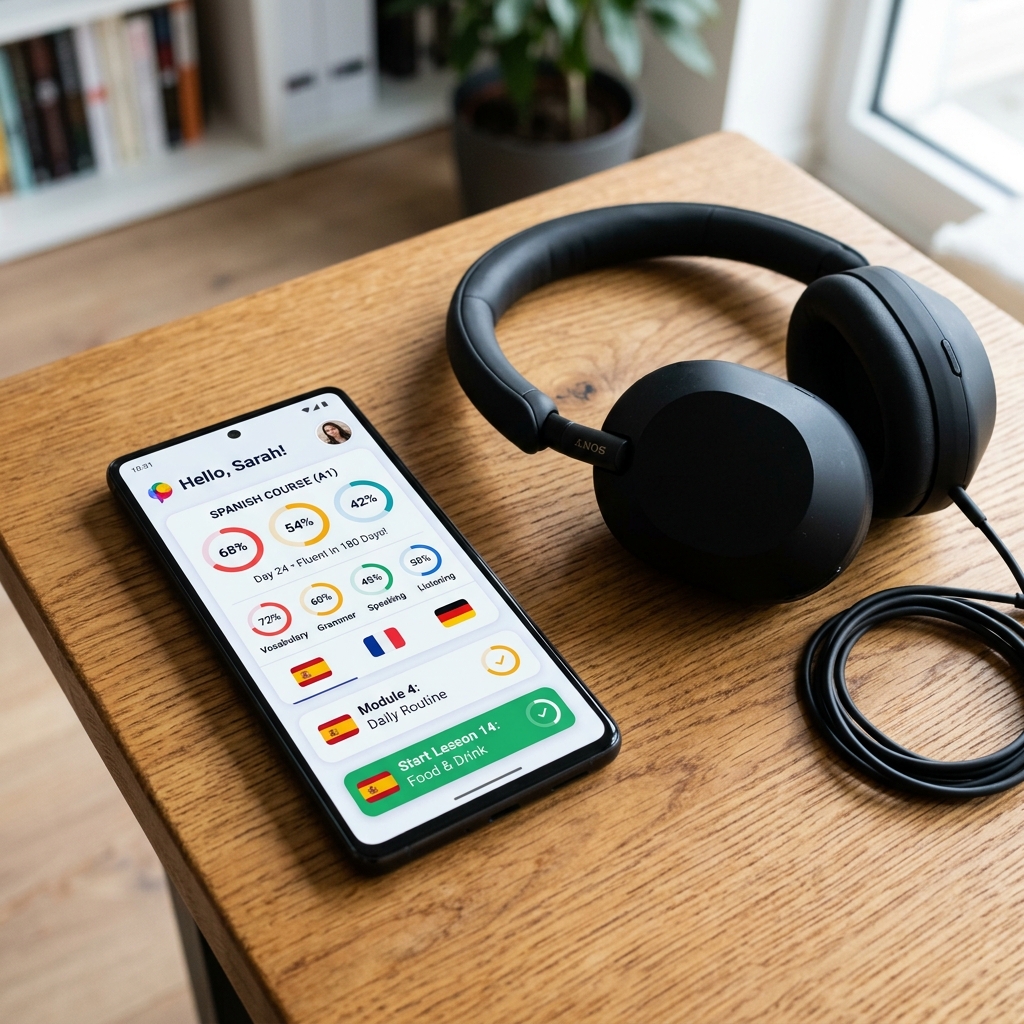
clear communication and professional vocabulary are more important.” heroImage: “/images/hero-apps.png”
Language skills are one of the few resume differentiators that are both increasingly valuable and genuinely acquirable by adults. But not all languages offer equal career return. This guide matches easy-to-learn languages with their professional applications, so you can invest your study time where it pays off.
The Business Language Matrix
The ideal business language sits at the intersection of two factors: how easy it is to learn and how much professional demand it has. Here is how the easy languages stack up:
| Language | FSI Hours | Career Demand | Best Sectors |
|---|---|---|---|
| Spanish | 600-750 | Very High | Healthcare, education, government, tourism, retail |
| French | 600-750 | High | Diplomacy, international orgs, African markets, fashion, food |
| Portuguese | 600-750 | Growing | Brazilian market, trade, energy |
| Dutch | 575-600 | Moderate | EU institutions, trade, logistics |
| Italian | 600-750 | Moderate | Fashion, food, luxury goods, art |
| Norwegian | 575-600 | Moderate | Energy (oil/gas), maritime, Scandinavian business |
| German* | 900 | Very High | Engineering, automotive, manufacturing, EU |
*German is FSI Category II (harder than Category I) but included because of its outsized business value.
1. Spanish --- The Highest-ROI Easy Language
Spanish is the most valuable easy language for professionals in the Americas. Here is why the numbers are compelling:
Market size: 500+ million native speakers. The combined GDP of Spanish-speaking countries exceeds $6 trillion.
U.S. demand: Over 40 million native Spanish speakers in the United States. Healthcare, education, social services, law enforcement, and government agencies actively seek bilingual employees. Many positions offer bilingual pay differentials (typically 5-15% above base salary).
Growing markets: Mexico, Colombia, Chile, and Spain have growing economies with increasing international business activity.
Sectors where Spanish adds most value:
- Healthcare: Patient communication in hospitals, clinics, and mental health services
- Education: Bilingual teaching positions and parent communication
- Legal: Immigration law, international contracts, interpreter roles
- Government: Federal, state, and local agencies serving Spanish-speaking communities
- Real estate and finance: Serving Hispanic/Latino clients and markets
- Tech: Product localization, customer support, Latin American market expansion
For learning details, see our Spanish difficulty guide.
2. French --- The International Career Language
French’s business value extends far beyond France. It is an official language of 29 countries and major international organizations.
Where French pays off:
- International organizations: UN, EU, NATO, World Bank, IMF, Red Cross, and Olympic Committee all use French as a working language
- Diplomacy and government: The State Department and intelligence agencies consistently need French speakers
- African markets: Francophone Africa is one of the fastest-growing economic regions, with a combined population exceeding 400 million
- Luxury and fashion: Paris-based luxury groups (LVMH, Kering, Hermes) value French language skills
- Hospitality and tourism: France is the world’s most visited country
Salary impact: LinkedIn data consistently shows French among the top languages associated with premium salaries in international roles.
See Is French Easy to Learn? for a realistic learning timeline.
3. Portuguese --- The Emerging Market Bet
Brazil is the world’s ninth-largest economy, and Portuguese gives you access to a market that most English-speaking professionals overlook.
Business advantages:
- Less competition: far fewer English-speaking professionals speak Portuguese compared to Spanish or French
- Brazil’s tech sector is growing rapidly (Sao Paulo is Latin America’s largest tech hub)
- Portuguese speakers can also handle business in Portugal, Mozambique, and Angola
- Trade relationships between Brazil and the United States are expanding
Key sectors: International trade, energy (Brazil’s pre-salt oil reserves), tech, agriculture, and manufacturing.
4. Dutch --- The EU and Trade Advantage
The Netherlands punches well above its weight economically. It is home to global companies like Shell, Philips, ASML, Unilever, and ING, and Rotterdam is Europe’s largest port.
Business advantages:
- The Netherlands is a top-10 economy in Europe by GDP per capita
- Amsterdam is a major European business hub
- Dutch is one of the fastest languages to learn
- Valuable for EU institutions (Dutch is an official EU language)
- Supply chain and logistics roles frequently involve Dutch-speaking counterparts
5. Norwegian --- The Energy Sector Niche
Norway’s economy is dominated by oil, gas, and maritime industries. Norwegian language skills are a differentiator in these sectors.
Niche advantages:
- Norway has the world’s largest sovereign wealth fund ($1.5+ trillion)
- Oil and gas companies (Equinor, Aker BP) operate globally
- Norwegian maritime companies are major players in global shipping
- Norwegian’s simple grammar means faster time-to-proficiency
How to Build Business Language Skills
The Business Language Learning Path
Unlike tourist language, business language requires specific vocabulary and register:
Phase 1: General Foundation (Months 1-4) Start with a structured app or course to build general vocabulary and grammar.
Phase 2: Business Vocabulary (Months 4-8)
- Add business-specific courses (Babbel offers business modules for several languages)
- Read business news in your target language (El Pais Economia, Les Echos, Folha de S. Paulo)
- Learn industry-specific terminology through bilingual glossaries
Phase 3: Professional Communication (Months 8-12)
- Practice business scenarios with a tutor (italki offers business-focused tutors)
- Write emails in the target language
- Attend industry events or networking groups in the target language
Phase 4: Certification (Optional)
- DELE for Spanish, DELF/DALF for French, CILS for Italian
- Language certifications add credibility to your resume
- Some employers require or prefer certified proficiency
Resources for Business Language Learners
- Structured learning apps: Duolingo vs. Babbel vs. Rosetta Stone comparison
- Books and tools: Best language learning tools for beginners
- For Spanish specifically: Best books to learn Spanish
Quantifying the Career ROI
Studies on bilingual salary premiums vary, but here are consistent findings:
- Bilingual federal employees in the U.S. can earn $10,000-$20,000+ in bilingual pay differentials
- MIT economists found that bilingual workers earn an average of 2% more overall, but this masks much higher premiums in language-dependent roles
- Recruiter surveys show that 90% of U.S. employers rely on workers who speak languages other than English
- In EU countries, multilingual professionals earn 10-15% more on average than monolingual peers
The highest premiums go to roles where language skills are essential (interpreter, translator, bilingual nurse, international sales) rather than merely helpful.
The Bottom Line
For the highest return on your language learning investment as an English speaker, Spanish offers the best combination of ease and demand. French is the best choice for internationally focused careers and diplomacy. Portuguese is an under-exploited opportunity for those targeting Brazilian or African markets.
The language that will help your career most depends on your industry and geography. A nurse in Miami benefits most from Spanish. A diplomat in Brussels benefits most from French. An energy executive benefits most from Norwegian or Portuguese.
For difficulty comparisons, see our 10 easiest languages ranking or the FSI difficulty system explained.
Frequently Asked Questions
What is the most valuable language to learn for business in 2026? ▼
Among easy-to-learn languages, Spanish offers the best combination of low learning difficulty and high business utility in the Americas. French is valuable for international organizations and African markets. For maximum career impact regardless of difficulty, Mandarin Chinese and German rank highest, though both require significantly more study time.
Is learning a language worth it for my career? ▼
Research consistently shows that bilingual employees earn 5-20% more than monolingual peers in comparable roles. Language skills also expand your candidate pool for international roles, open doors to global markets, and demonstrate cognitive flexibility that employers value. The ROI is highest in sectors like healthcare, law, government, education, international business, and tourism.
Can I list a language on my resume if I am not fluent? ▼
Yes, but be honest about your level. Use standardized descriptors: Basic (A1-A2), Conversational (B1), Professional Working (B2), Full Professional (C1), Native/Bilingual (C2). Overstating your level can backfire in interviews. Even listing 'Basic Spanish' or 'Conversational French' adds value if it is relevant to the role.
Which industries value language skills most? ▼
Healthcare (serving diverse patient populations), government and diplomacy, international trade and logistics, tourism and hospitality, legal services (immigration, international law), education, marketing and advertising (multicultural campaigns), and tech companies expanding into new markets. The specific language that is most valuable depends on the industry's geographic focus.
How long does it take to reach business-level proficiency? ▼
Business proficiency (CEFR B2/ILR 2) in a Category I language like Spanish or French typically requires 12-18 months of consistent self-study or 6-9 months with intensive courses. You do not need perfect grammar for most business contexts.
We research and compile information about language learning from linguistic studies, FSI data, and language learning communities.
Related reading
 Learning Tips
Easiest Language to Learn After 40: It's Not Too Late
Think you are too old to learn a language? Research says otherwise. Here are the best languages and strategies for adult learners over 40.
 Language Rankings
What Is the Easiest Language to Learn for English Speakers?
Discover the 10 easiest languages for English speakers ranked by FSI data, grammar complexity, and learner experience. Updated for 2026.
Learning TipsEasiest Language to Learn for Kids: A Parent's Guide
Which languages are best for children to learn? Age-appropriate recommendations, resources, and realistic expectations for parents.