What Is the Easiest Language to Learn for English Speakers?
The Language Research Desk
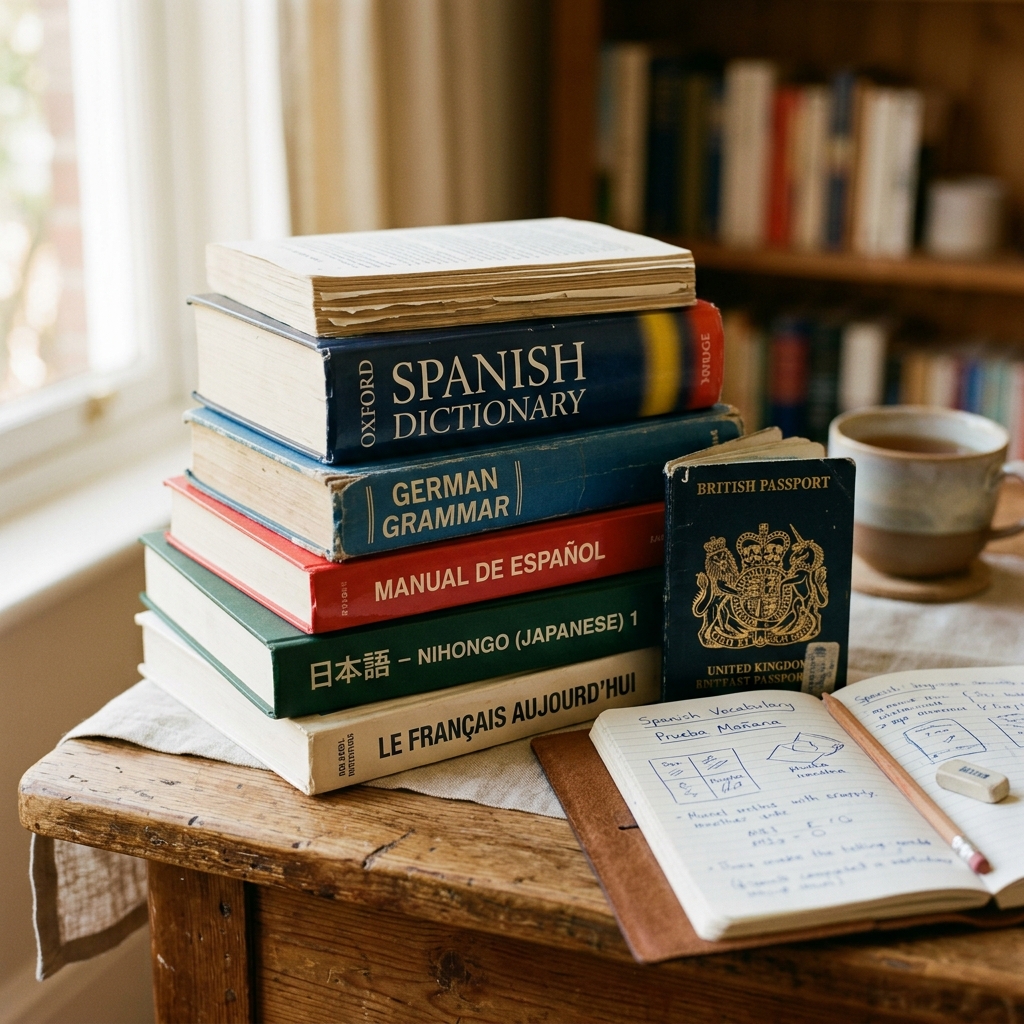
The short answer: Spanish, Dutch, Norwegian, Italian, and Portuguese consistently rank as the easiest languages for native English speakers. But the “easiest” language for you depends on your goals, your motivation, and which similarities click with your brain.
This guide breaks down the top 10 easiest languages using FSI (Foreign Service Institute) difficulty data, linguistic similarity research, and real feedback from language learners. No hype, no false promises --- just the research.
How We Rank Language Difficulty
Before diving into the list, here is how language difficulty is typically measured:
The FSI Classification System is the most widely referenced framework. The U.S. Foreign Service Institute has trained thousands of English-speaking diplomats since the 1940s and tracks how long each language takes to reach “Professional Working Proficiency” (ILR Level 3). They group languages into four categories:
| Category | Hours to Proficiency | Examples |
|---|---|---|
| Category I | 600-750 hours | Spanish, French, Dutch, Italian |
| Category II | 900 hours | German, Indonesian |
| Category III | 1,100 hours | Russian, Hindi, Thai |
| Category IV | 2,200 hours | Mandarin, Arabic, Japanese, Korean |
For a deeper look at how these rankings work, see our complete FSI difficulty rankings breakdown.
These numbers assume intensive, full-time classroom study with trained instructors. Self-learners should expect to spend roughly 1.5 to 3 times longer, depending on their method and consistency.
The 10 Easiest Languages for English Speakers
1. Spanish
FSI Category: I (600-750 hours) | Writing System: Latin alphabet
Spanish is the most popular second language choice for English speakers, and for good reason. English and Spanish share thousands of cognates --- words that look and mean similar things (hospital/hospital, family/familia, important/importante). Spanish pronunciation is largely phonetic, meaning words are pronounced the way they are spelled.
Why it is easy:
- Massive cognate overlap with English (30-40% shared vocabulary through Latin roots)
- Phonetic spelling system with only 5 vowel sounds
- Straightforward pronunciation rules with few exceptions
- Enormous resource availability (apps, courses, media, tutors)
- Hundreds of millions of native speakers for conversation practice
What is tricky:
- Gendered nouns (every noun is masculine or feminine)
- Subjunctive verb mood takes time to master
- Multiple past tenses (preterite vs. imperfect)
Read our full Spanish difficulty deep dive for a realistic beginner timeline.
2. Dutch
FSI Category: I (575-600 hours) | Writing System: Latin alphabet
Dutch is arguably the closest living relative to English among major world languages. The two share Germanic roots, similar word order, and a large number of nearly identical words. Many English speakers report being able to read basic Dutch text with minimal study.
Why it is easy:
- Extremely similar vocabulary (water/water, begin/begin, open/open)
- Similar sentence structure to English (Subject-Verb-Object in main clauses)
- No noun cases (unlike German)
- Logical compound word formation
What is tricky:
- The “g” and “r” sounds require practice
- Verb placement shifts in subordinate clauses
- Fewer learning resources than Spanish or French
See our detailed Dutch guide for what makes it an overlooked gem.
3. Norwegian (Bokmaal)
FSI Category: I (575-600 hours) | Writing System: Latin alphabet
Norwegian Bokmaal is consistently rated among the absolute easiest languages for English speakers by the FSI. It shares deep Germanic roots with English, has relatively simple grammar, and its pitch accent, while unfamiliar, does not change word meaning the way tones do in Mandarin.
Why it is easy:
- Very similar vocabulary to English (land/land, finger/finger, arm/arm)
- Simple verb conjugation (no conjugation by person --- one form fits all)
- No noun cases
- Intuitive word order
What is tricky:
- Gendered nouns (three genders: masculine, feminine, neuter)
- Pitch accent is unusual for English speakers
- Limited opportunities for immersion outside Scandinavia
Curious? Read Is Norwegian Easy to Learn? for the full breakdown.
4. Italian
FSI Category: I (600-750 hours) | Writing System: Latin alphabet
Italian is often called the most phonetic of the Romance languages. Its pronunciation rules are consistent, and the melodic rhythm makes it satisfying to speak even as a beginner.
Why it is easy:
- Highly phonetic --- what you see is what you say
- Large shared Latin vocabulary with English
- Clear, consistent pronunciation rules
- Rich cultural motivation (food, music, art, travel)
What is tricky:
- Complex verb conjugation system (more forms than Spanish)
- Gendered nouns with agreement rules
- Double consonants change meaning (e.g., pena vs. penna)
Get the full picture in Is Italian Easy to Learn?.
5. Portuguese
FSI Category: I (600-750 hours) | Writing System: Latin alphabet
Portuguese shares roughly 89% lexical similarity with Spanish, and its Latin roots give it substantial vocabulary overlap with English. Brazilian Portuguese in particular benefits from a massive media ecosystem (music, Netflix shows, YouTube) that makes immersion accessible.
Why it is easy:
- Huge cognate overlap with both English and Spanish
- Growing availability of Brazilian Portuguese media
- If you know Spanish, Portuguese becomes dramatically easier
What is tricky:
- Nasal vowels are challenging for English speakers
- Brazilian vs. European Portuguese have significant pronunciation differences
- More complex verb conjugation than Spanish
6. French
FSI Category: I (600-750 hours) | Writing System: Latin alphabet
French has contributed an estimated 29% of English vocabulary through the Norman Conquest and centuries of cultural exchange. This gives English speakers a huge head start on reading comprehension.
Why it is easy:
- Roughly 40% of English words have French origins
- Reading comprehension comes quickly
- Enormous resource library (courses, media, literature)
- Widely spoken across multiple continents
What is tricky:
- Pronunciation is famously challenging (silent letters, nasal vowels, liaisons)
- Significant gap between written and spoken French
- Gendered nouns with seemingly arbitrary assignments
Read our honest assessment: Is French Easy to Learn?.
7. Swedish
FSI Category: I (575-600 hours) | Writing System: Latin alphabet
Swedish shares the same Scandinavian language family as Norwegian and offers similar advantages for English speakers. Sweden also has exceptionally high English proficiency, which makes finding conversation partners straightforward but can make immersion harder.
Why it is easy:
- Close vocabulary overlap with English
- Relatively simple grammar
- Strong English proficiency among Swedes (helpful for explanations)
- Good availability of learning resources (including free Swedish courses offered by the Swedish Institute)
What is tricky:
- Pitch accent system similar to Norwegian
- Three grammatical genders (though increasingly simplified in modern usage)
- Swedes often switch to English, making practice difficult
8. Danish
FSI Category: I (575-600 hours) | Writing System: Latin alphabet
Danish is linguistically very close to Norwegian and Swedish, but its pronunciation is notoriously challenging. Words are heavily reduced in speech, and the “stod” (glottal stop) takes practice. Written Danish, however, is very approachable for English speakers.
Why it is easy:
- Written Danish is very similar to Norwegian
- Shared Germanic vocabulary with English
- Two grammatical genders instead of three (simpler than Norwegian and Swedish)
- Simple verb conjugation
What is tricky:
- Pronunciation is significantly harder than Norwegian or Swedish
- Spoken Danish sounds very different from written Danish
- Danes often joke that even they struggle to understand each other
9. Romanian
FSI Category: I (600-750 hours) | Writing System: Latin alphabet
Romanian is a Romance language with a twist --- it retained the noun case system that Spanish, French, and Italian dropped centuries ago. Despite this, its Latin vocabulary base and phonetic spelling make it surprisingly accessible.
Why it is easy:
- Phonetic spelling (words are pronounced as written)
- Latin-based vocabulary with recognizable cognates
- Uses the Latin alphabet (with a few extra characters)
What is tricky:
- Noun cases and definite articles attached to the end of nouns
- Some Slavic vocabulary influence
- Fewer learning resources compared to other Romance languages
10. Afrikaans
FSI Category: I (estimated 575-600 hours) | Writing System: Latin alphabet
Afrikaans developed from 17th-century Dutch and has simplified dramatically over time. It has no verb conjugation by person, no grammatical gender, and relatively straightforward syntax.
Why it is easy:
- Simplified grammar with almost no verb conjugation
- No grammatical gender
- Dutch-derived vocabulary (which overlaps heavily with English)
- Phonetic spelling
What is tricky:
- Double negation is standard (Ek kan nie Afrikaans praat nie)
- Limited immersion opportunities outside South Africa
- Far fewer learning resources than other languages on this list
Which Easy Language Should You Learn?
The “best” easy language depends on your situation:
- For career prospects: Spanish or French offer the widest professional applications
- For travel: Spanish, French, or Italian open the most doors
- For the fastest results: Dutch, Norwegian, or Afrikaans have the simplest grammar for English speakers
- For kids: Spanish or French have the most child-friendly resources
- For absolute beginners: Check our beginner-specific ranking
- For a study plan, not just a ranking: See how to learn the easiest languages for English speakers
- For a harder European family: Our easiest Slavic language guide compares Bulgarian, Russian, Polish, and Czech
Getting Started: Practical Next Steps
- Pick one language based on your goals, not just difficulty
- Start with a structured app like Duolingo, Babbel, or Rosetta Stone to build vocabulary basics
- Add a textbook or workbook within the first month --- see our best Spanish books guide for an example
- Find conversation practice through language exchange apps (HelloTalk, Tandem) or local meetups
- Consume media in your target language (music, podcasts, Netflix with subtitles)
For a comprehensive look at learning tools and resources, we have reviewed the most popular options for beginners.
The Bottom Line
Every language on this list is achievable for a motivated English speaker within 1-2 years of consistent practice. The FSI data gives you a rough roadmap, but your personal experience will depend on how much time you invest and how you spend that time. The easiest language is ultimately the one you are most motivated to stick with.
Frequently Asked Questions
What is the single easiest language for English speakers to learn? ▼
Most linguistic research points to Dutch or Norwegian as the easiest languages for English speakers, though Spanish is often cited as the most practical easy language due to widespread resources and immersion opportunities. FSI classifies all three as Category I languages requiring roughly 575-600 class hours.
How long does it take to learn the easiest languages? ▼
According to FSI data, Category I languages (the easiest group for English speakers) take approximately 24-30 weeks or 600-750 class hours to reach professional working proficiency. This assumes intensive full-time study. Self-learners typically need 1.5 to 3 times longer.
Is Duolingo enough to learn an easy language? ▼
Duolingo can build a foundation in vocabulary and basic grammar, but most learners need additional resources for conversational fluency. Combining an app with conversation practice, reading, and listening gives better results than any single tool alone.
Are Romance languages easier than Germanic languages for English speakers? ▼
Both groups are rated Category I by the FSI. Romance languages (Spanish, French, Italian, Portuguese) share Latin-derived vocabulary with English, while Germanic languages (Dutch, Norwegian, Swedish, Danish) share grammatical structures and core vocabulary. It depends on which similarities your brain latches onto faster.
Does age affect how easily you can learn a language? ▼
Adults can absolutely learn new languages effectively. While children may acquire native-like pronunciation more naturally, adults have advantages in understanding grammar patterns and using study strategies. Research shows motivation and consistent practice matter far more than age.
What makes a language easy or hard for English speakers? ▼
Key factors include vocabulary overlap (cognates), grammatical similarity, writing system (alphabet vs. characters), phonetic complexity (new sounds), and available learning resources. Languages closely related to English through shared Germanic or Latin roots tend to be easier.
We research and compile information about language learning from linguistic studies, FSI data, and language learning communities.
Related reading
 Learning Tips
Easiest Language to Learn After 40: It's Not Too Late
Think you are too old to learn a language? Research says otherwise. Here are the best languages and strategies for adult learners over 40.
 Comparisons
Easiest Language to Learn for Business and Career Growth
Which easy-to-learn languages offer the best career ROI? We rank languages by business utility, job demand, and learning difficulty.
Learning TipsEasiest Language to Learn for Kids: A Parent's Guide
Which languages are best for children to learn? Age-appropriate recommendations, resources, and realistic expectations for parents.