Easiest Language to Learn for Travel: 7 Languages That Open the Most Doors
The Language Research Desk
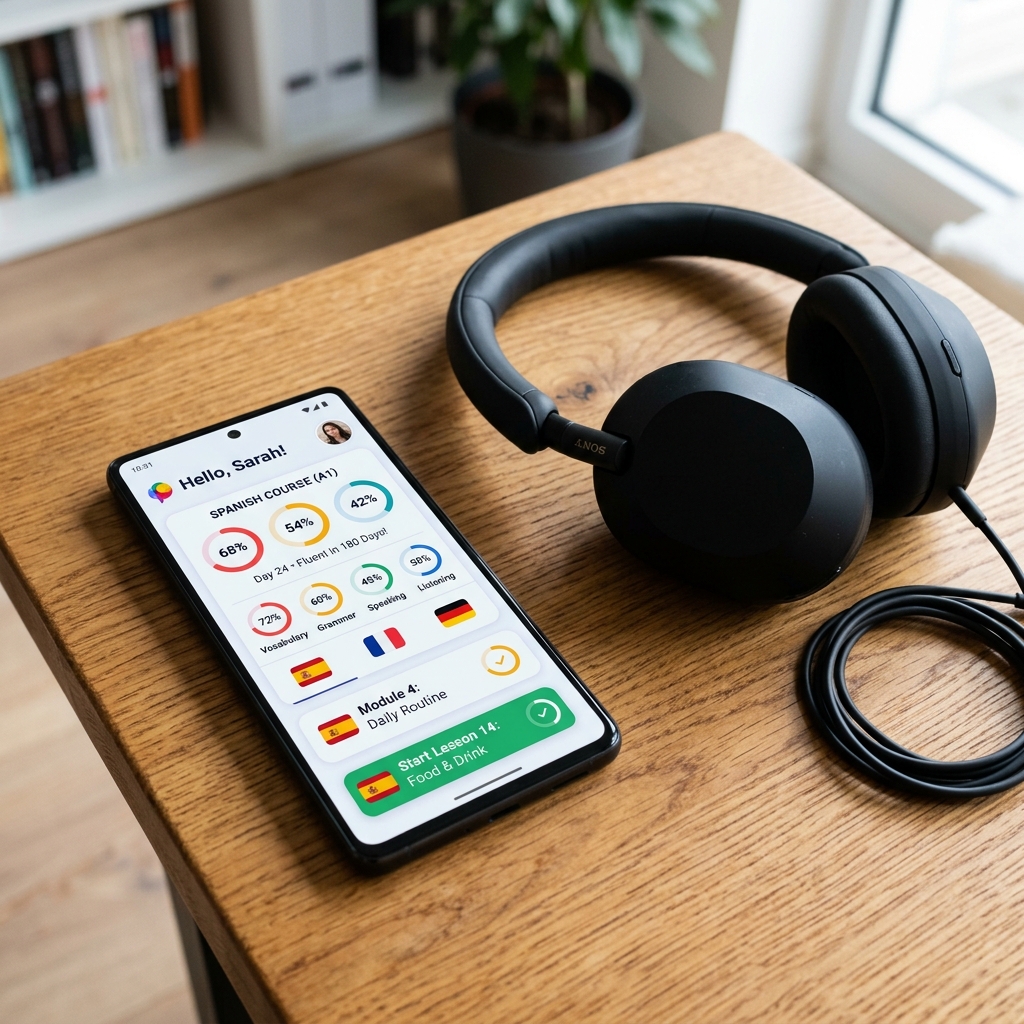
Not all easy languages are equally useful for travelers. The best travel language combines ease of learning with broad geographic coverage and practical daily-use value. Here are 7 languages that deliver the most travel utility per hour of study, ranked by a combination of FSI difficulty and countries covered.
1. Spanish --- 20+ Countries, Easiest Entry
Countries covered: Spain, Mexico, Colombia, Argentina, Peru, Chile, Ecuador, Cuba, Dominican Republic, Guatemala, Costa Rica, Panama, and 8+ more across the Americas, plus Equatorial Guinea in Africa
FSI Category: I (600-750 hours) | Travel phrases in: 2-3 weeks
Spanish is the undisputed champion of travel languages. No other easy language gives you coverage across so many countries and continents. From Barcelona to Buenos Aires, Mexico City to Medellin, Spanish unlocks authentic experiences across some of the world’s most popular travel destinations.
Why it wins for travel:
- More countries than any other language on this list
- Travelers with basic Spanish consistently report better prices, friendlier interactions, and access to local experiences
- Phonetic pronunciation means locals understand you even with an accent
- Enormous variety of travel experiences: beaches, mountains, cities, ruins, food
- Budget-friendly destinations in Latin America make extended stays possible
Essential travel Spanish takes: 2-4 weeks of focused study for survival phrases, 3-6 months for comfortable conversations.
For a detailed breakdown, read Is Spanish Easy to Learn?
2. French --- 29 Countries Across 5 Continents
Countries covered: France, Belgium, Switzerland, Luxembourg, Monaco, Canada (Quebec), plus 20+ African nations including Morocco, Senegal, Ivory Coast, and the Democratic Republic of Congo
FSI Category: I (600-750 hours) | Travel phrases in: 3-4 weeks
French covers more countries than any other language on earth (29 with official status). While many of those are in Africa (a growing travel destination), French also opens doors in some of Europe’s most visited countries.
Why it is great for travel:
- Paris alone receives 30+ million tourists annually --- basic French improves the experience enormously
- French-speaking Africa is increasingly popular for adventurous travelers
- Quebec, French Polynesia, and Caribbean islands add diverse travel options
- French speakers in tourist areas appreciate the effort, even imperfect attempts
- Strong vocabulary overlap with English makes reading menus and signs easier
The pronunciation challenge: Unlike Spanish, French pronunciation is not intuitive. Budget extra time for pronunciation practice before your trip.
3. Italian --- The Mediterranean Sweet Spot
Countries covered: Italy, San Marino, Vatican City, parts of Switzerland
FSI Category: I (600-750 hours) | Travel phrases in: 2-3 weeks
Italy is consistently among the world’s top 5 most visited countries, and Italian is one of the most phonetic languages you can learn. The country’s regional diversity means you could travel in Italy for months without repeating experiences.
Why it is great for travel:
- Italy’s food, art, architecture, coastlines, and history make it endlessly rewarding
- Italian pronunciation is straightforward --- locals understand you quickly
- Italians are enthusiastic about foreigners speaking their language
- Reading menus, signs, and museum descriptions becomes possible quickly
- Knowledge of Italian helps throughout the Mediterranean
Limited geographic scope: Italian is primarily useful in Italy. But if Italy is high on your travel list, the investment is immediately rewarding.
4. Portuguese --- The Underrated Travel Language
Countries covered: Brazil, Portugal, Mozambique, Angola, Cape Verde, Sao Tome and Principe, Guinea-Bissau, East Timor
FSI Category: I (600-750 hours) | Travel phrases in: 3-4 weeks
Brazil alone would justify learning Portuguese for travel. It is the fifth-largest country in the world, home to the Amazon, spectacular beaches, vibrant cities, and one of the world’s most dynamic cultures.
Why it is great for travel:
- Brazil is enormous and increasingly accessible to international travelers
- Portugal is one of Europe’s most affordable Western destinations
- Brazilian music, food, and culture make the learning process enjoyable
- Less tourist infrastructure in Brazil means Portuguese is more necessary (and more rewarding) than English
- If you know Spanish, Portuguese is significantly easier to learn
5. Dutch --- The Northern European Bonus
Countries covered: Netherlands, Belgium (Flanders), Suriname, Curacao, Aruba, Bonaire, Sint Maarten
FSI Category: I (575-600 hours) | Travel phrases in: 2-3 weeks
While the Dutch speak excellent English, having basic Dutch opens up cultural experiences and local warmth that English-only tourists miss.
Why it is useful for travel:
- The Netherlands is a top European destination (Amsterdam, Utrecht, tulip fields, cycling)
- Dutch is one of the closest languages to English --- quick to pick up
- Extends to Caribbean islands (Curacao, Aruba) for tropical travel
- Flemish Belgium (Bruges, Ghent, Antwerp) is a rewarding travel region
6. Norwegian --- The Scandinavian Gateway
Countries covered: Norway (plus mutual intelligibility with Sweden and Denmark)
FSI Category: I (575-600 hours) | Travel phrases in: 2-3 weeks
Norway’s fjords, northern lights, and outdoor culture make it a bucket-list destination. While Norwegians speak excellent English, Norwegian is one of the simplest languages to pick up, and basic proficiency shows respect for the culture.
The Scandinavian bonus: Norwegian provides partial intelligibility with Swedish and Danish, effectively covering three countries with one language.
7. Indonesian --- Southeast Asia’s Easiest Language
Countries covered: Indonesia (17,000+ islands)
FSI Category: II (900 hours, but often faster in practice) | Travel phrases in: 2-3 weeks
Indonesia is an emerging travel powerhouse --- Bali, Java, Komodo, Raja Ampat, Sumatra. Outside of Bali’s tourist zone, English proficiency drops quickly, making Indonesian genuinely useful.
Why it is worth it:
- Indonesia is one of the most affordable travel destinations in the world
- Indonesian has no tones, no verb conjugation, and no gendered nouns
- The Latin alphabet makes reading signs and menus straightforward
- Even basic Indonesian earns enormous goodwill from locals
How to Maximize Language Learning for Travel
The 80/20 Strategy
You do not need fluency for travel. Focus on the 20% of language that covers 80% of travel situations:
- Greetings and pleasantries (hello, thank you, excuse me, please)
- Numbers and money (prices, counting, bargaining)
- Food and drink (ordering, dietary restrictions, “the check please”)
- Directions (where is, left, right, near, far)
- Emergency phrases (help, hospital, police, I need…)
- Transportation (bus, train, taxi, ticket, how much)
Timeline by Goal
| Goal | Time Needed | Method |
|---|---|---|
| Survival phrases | 2-3 weeks | App + phrasebook |
| Basic tourist conversations | 1-3 months | App + podcast + phrase practice |
| Comfortable social interaction | 4-8 months | Structured course + conversation practice |
| Meaningful conversations with locals | 8-12 months | Full study regimen |
Best Pre-Trip Resources
- Language learning apps for daily vocabulary
- Pimsleur audio courses for pronunciation (use during commutes)
- A pocket phrasebook or offline translation app
- YouTube channels for travel-specific phrases
- Check our complete tools roundup for more options
The Bottom Line
Spanish wins the travel language competition by a wide margin: it is easy, covers 20+ countries, and delivers immediate practical value. But the best travel language is the one that matches your travel plans. If Italy is your dream, learn Italian. If Scandinavia calls, pick up Norwegian. The hour-to-reward ratio of any language on this list is excellent.
For a broader look at language difficulty, see our main easiest languages ranking or the FSI difficulty system explained.
Frequently Asked Questions
What is the single most useful language for travel? ▼
Spanish. It is the official or co-official language in 20 countries across the Americas, Europe, and Africa. Combined with its FSI Category I easiness for English speakers, massive learning resources, and generally patient native speakers, Spanish offers the best ratio of effort to travel utility.
Can I get by with just English when traveling? ▼
In Western Europe, major tourist cities, and international business hubs, English often suffices. But knowing even basic phrases in the local language dramatically improves travel experiences — better prices, warmer interactions, access to non-tourist areas, and the ability to handle emergencies. In Latin America, Southeast Asia, and rural areas globally, English is far less reliable.
How much of a language do I need for travel? ▼
Survival travel language (greetings, directions, ordering food, numbers, emergency phrases) can be learned in 2-4 weeks of focused study. Comfortable conversational ability for meaningful interactions takes 3-6 months. You do not need fluency to travel well.
Is it worth learning a language for a one-week vacation? ▼
Even 20-30 basic phrases dramatically improve a one-week trip. Locals respond positively to any effort, and simple phrases like greetings, please/thank you, ordering food, and asking for directions cover most tourist interactions. A two-week Duolingo sprint before a trip is a worthwhile investment.
What about translation apps --- do I still need to learn languages? ▼
Translation apps have improved dramatically and handle basic communication well. However, they cannot replace the spontaneity and warmth of speaking directly, they fail in noisy environments, they require internet connectivity, and they cannot help you eavesdrop on context (overhead announcements, signs, menus). They are a valuable supplement, not a replacement.
We research and compile information about language learning from linguistic studies, FSI data, and language learning communities.
Related reading
 Learning Tips
Easiest Language to Learn After 40: It's Not Too Late
Think you are too old to learn a language? Research says otherwise. Here are the best languages and strategies for adult learners over 40.
 Comparisons
Easiest Language to Learn for Business and Career Growth
Which easy-to-learn languages offer the best career ROI? We rank languages by business utility, job demand, and learning difficulty.
 Language Rankings
What Is the Easiest Language to Learn for English Speakers?
Discover the 10 easiest languages for English speakers ranked by FSI data, grammar complexity, and learner experience. Updated for 2026.