10 Easiest Languages to Learn for Absolute Beginners
The Language Research Desk
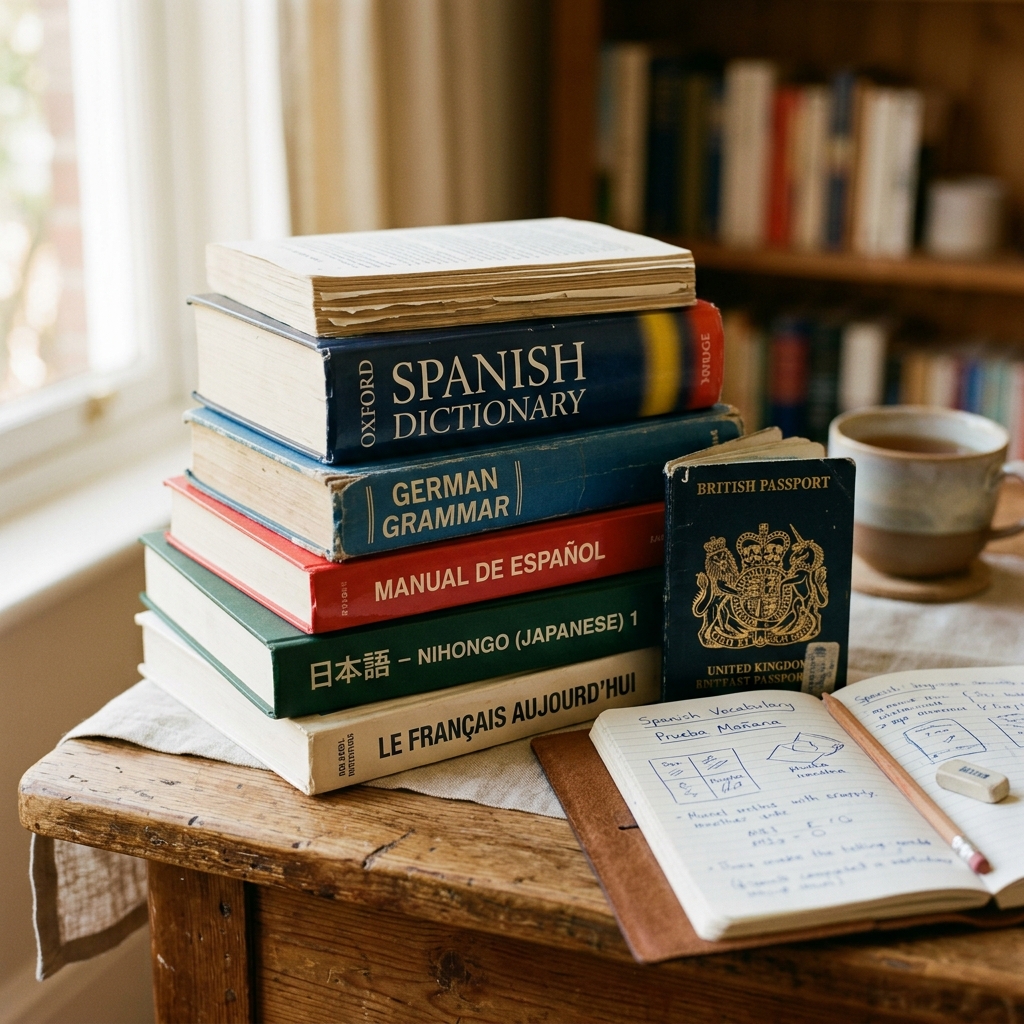
This ranking is the first-language / resource-availability sibling: how forgiving a language is when you have never studied one before. The FSI-style top-ten for English speakers is What Is the Easiest Language to Learn for English Speakers?. The study-plan sibling is how to learn those easiest languages.
Learning your first foreign language is fundamentally different from learning your second or third. You do not just learn a language --- you learn how to learn a language. That is why the first one matters so much, and why picking a beginner-friendly option can set you up for long-term success.
This guide ranks the 10 most beginner-friendly languages for English speakers, considering not just linguistic difficulty but also resource availability, community size, and how forgiving each language is when you make mistakes.
What Makes a Language Beginner-Friendly?
Difficulty rankings like the FSI system measure linguistic distance from English. But for absolute beginners, other factors matter just as much:
- Resource availability --- Can you find apps, textbooks, YouTube channels, and tutors easily?
- Community size --- Can you find conversation partners and immersion content?
- Forgiveness --- Will native speakers understand you even with mistakes?
- Early wins --- Can you form basic sentences quickly enough to stay motivated?
- Phonetic transparency --- Can you read words and know how to pronounce them?
With those criteria in mind, here are the 10 best languages for your first foreign language.
1. Spanish --- The Best All-Around First Language
Why beginners love it: Spanish is phonetic (you read what you see), has clear pronunciation rules, and offers practically unlimited resources. Within weeks, you can order food, introduce yourself, and understand basic conversations. Spanish speakers are generally enthusiastic and patient with learners.
Time to basic conversation: 3-6 months with daily practice
Best starting resources:
- Duolingo, Babbel, or Rosetta Stone for daily vocabulary building
- A structured textbook for grammar --- see our best Spanish books guide
- Netflix Spanish-language shows with subtitles (Money Heist, Elite)
- Coffee Break Spanish podcast (free)
The catch: Verb conjugation gets complex quickly. The subjunctive mood takes months to internalize. But you can communicate effectively long before mastering these.
Read our detailed guide: Is Spanish Easy to Learn?
2. Italian --- The Most Phonetic Romance Language
Why beginners love it: Italian pronunciation is arguably the most consistent of any major European language. Each letter (almost) always makes the same sound. The language feels musical and rewarding to speak, and Italian culture (food, music, art) provides strong motivation.
Time to basic conversation: 3-6 months with daily practice
Best starting resources:
- Pimsleur Italian (strong for pronunciation)
- Language Transfer Italian (free audio course, excellent for grammar)
- Easy Italian YouTube channel
The catch: Verb conjugation is more complex than Spanish. Fewer global speakers means fewer practice opportunities compared to Spanish.
Full breakdown: Is Italian Easy to Learn?
3. Norwegian (Bokmaal) --- The Easiest Grammar
Why beginners love it: Norwegian has what many linguists consider the simplest grammar of any language commonly studied by English speakers. Verbs do not change based on person (I am, you am, he am --- Norwegian uses one verb form for all subjects). Word order is intuitive for English speakers, and vocabulary overlap is substantial.
Time to basic conversation: 3-5 months with daily practice
Best starting resources:
- Duolingo Norwegian course (rated as one of their best)
- NorwegianClass101 podcast
- NRK (Norwegian public television) streams free online
The catch: Three grammatical genders. Limited practice opportunities outside Scandinavia. Norwegians speak excellent English, so they may switch languages on you.
Full guide: Is Norwegian Easy to Learn?
4. Dutch --- English’s Closest Major Relative
Why beginners love it: Dutch is so close to English that you can often guess the meaning of written Dutch without any study. Sentences like “De kat zit op de mat” (The cat sits on the mat) are immediately understandable. This gives beginners a massive head start in reading comprehension.
Time to basic conversation: 3-5 months with daily practice
Best starting resources:
- Duolingo Dutch course
- Babbel Dutch (strong structured approach)
- DutchPod101
The catch: Dutch pronunciation is harder than it looks. The “g” sound (a harsh guttural) and “ui” diphthong take practice. Fewer resources than Spanish or French.
Full guide: Is Dutch Easy to Learn?
5. French --- The Vocabulary Shortcut
Why beginners love it: Approximately 40% of English vocabulary has French origins. This means your reading comprehension in French advances quickly --- you will recognize words like restaurant, bureau, apartment, chocolate, excuse, chef, finance, police, machine, orange. French is also spoken on every continent, giving you enormous practical use.
Time to basic conversation: 4-7 months with daily practice
Best starting resources:
- Pimsleur French (strong for training your ear)
- Assimil French (textbook beloved by polyglots)
- InnerFrench podcast (intermediate, but excellent)
The catch: French pronunciation is genuinely difficult for beginners. Silent letters, nasal vowels, and liaisons mean that spoken French sounds very different from written French. Many beginners find they can read French far sooner than they can understand spoken French.
Full guide: Is French Easy to Learn?
6. Portuguese (Brazilian) --- The Next Big Language
Why beginners love it: Brazilian Portuguese benefits from a massive media ecosystem --- Brazilian music (bossa nova, sertanejo, funk), Netflix originals, and YouTube content. The language is phonetically rich and expressive. If you already know any Spanish, Portuguese becomes significantly easier.
Time to basic conversation: 4-6 months with daily practice
Best starting resources:
- Pimsleur Brazilian Portuguese
- PortuguesePod101
- Brazilianpodclass podcast
The catch: Nasal vowels are a new sound for English speakers. Portuguese verb conjugation is complex, and the differences between Brazilian and European Portuguese can be confusing for beginners.
7. Swedish --- The Accessible Scandinavian Option
Why beginners love it: Sweden offers a free, government-funded digital course for learning Swedish (SFI Online), and Swedes are generally patient with learners. The vocabulary overlap with English is substantial, and IKEA furniture names have already taught you a few words.
Time to basic conversation: 3-6 months with daily practice
Best starting resources:
- Duolingo Swedish
- SFI Online (free government course)
- 8 Sidor (simplified Swedish news)
The catch: Similar challenges to Norwegian --- pitch accent, gendered nouns, and Swedes switching to English.
8. Afrikaans --- The Grammatically Simplest
Why beginners love it: Afrikaans may have the simplest grammar of any language commonly available for study. No verb conjugation by person. No grammatical gender. Relatively simple syntax. It evolved from Dutch but simplified dramatically over time.
Time to basic conversation: 2-4 months with daily practice
Best starting resources:
- Afrikaans courses on Ling or Mondly
- AfrikaansPod101
- South African films and music
The catch: Very limited resources compared to major European languages. Few practice partners outside South Africa and Namibia.
9. Romanian --- The Underrated Romance Language
Why beginners love it: Romanian is the most phonetic Romance language --- words are pronounced exactly as they are spelled, with no exceptions. Its Latin vocabulary base gives English speakers plenty of recognizable words.
Time to basic conversation: 4-6 months with daily practice
Best starting resources:
- Duolingo Romanian
- RomanianPod101
- Romanian films on streaming platforms
The catch: Romanian has noun cases (unlike other Romance languages) and a different feel from its Western cousins. Resources are limited but growing.
10. Indonesian (Bahasa Indonesia) --- The Surprise Entry
Why beginners love it: Indonesian uses the Latin alphabet, has no verb conjugation, no grammatical gender, no tones, and no noun cases. Its grammar is remarkably straightforward for English speakers, even though it is not related to English.
Time to basic conversation: 3-5 months with daily practice
Best starting resources:
- Duolingo Indonesian
- IndonesianPod101
- Indonesian language YouTube channels
The catch: Virtually no vocabulary overlap with English. You are starting from zero with every word. However, the simple grammar compensates for this significantly.
Tips for Absolute First-Time Language Learners
Having covered the languages, here is what actually matters when starting your first one:
1. Consistency Beats Intensity
Fifteen minutes daily is better than two hours on Saturday. Your brain needs regular repetition to form long-term memories. Set a daily minimum and protect it.
2. Use Multiple Resources
No single app, book, or course is complete. A good beginner stack includes: one structured course (app or textbook) for grammar, one audio resource for listening and pronunciation, and one source of native content (music, shows, podcasts).
Check out our complete tools roundup for specific recommendations.
3. Speak Early and Badly
Many beginners wait until they feel “ready” to speak. You will never feel ready. Start speaking in week one, even if it is just reading sentences aloud to yourself. Use language exchange apps to find patient conversation partners.
4. Accept the Plateau
Every language learner hits a plateau around months 3-4 where progress feels invisible. This is normal. Your brain is consolidating. Keep practicing, and the plateau will break.
5. Set Concrete Goals
“Learn Spanish” is not a goal. “Order dinner in Spanish on my trip to Mexico in April” is a goal. Concrete targets keep you motivated through the inevitable difficult stretches.
The Bottom Line
Your first language sets the foundation for all future language learning. Pick one that excites you from this list, combine 2-3 learning resources, and commit to daily practice. Every language here is achievable within a year of consistent effort. The hardest part is not the grammar or vocabulary --- it is showing up every day.
For more detailed information, read our main easiest languages ranking or explore individual language guides for Spanish, French, Italian, Dutch, and Norwegian.
Frequently Asked Questions
What is the best first language to learn if I have never studied a foreign language? ▼
Spanish is widely considered the best first foreign language for English-speaking beginners. It has phonetic spelling, straightforward pronunciation, massive resource availability, and hundreds of millions of speakers for practice. It also builds a foundation that makes learning other Romance languages easier later.
Can I learn a language as a complete beginner without classes? ▼
Yes. Many successful language learners are self-taught using a combination of apps, textbooks, media consumption, and online conversation partners. The key is using multiple resource types rather than relying on a single app. Structured courses and textbooks provide grammar foundations that apps alone often miss.
How many hours per day should a beginner study? ▼
Consistency matters more than volume. Research suggests 30-60 minutes of focused daily practice is more effective than occasional marathon sessions. Start with 20-30 minutes daily and increase as it becomes a habit. Even 15 minutes daily will produce measurable progress over months.
What is the fastest language to learn from zero? ▼
Afrikaans, Norwegian, and Dutch have the simplest grammar for English speakers. However, the fastest language you can learn is the one with the most resources in your situation. Spanish and French have far more apps, courses, tutors, and media available, which often compensates for their slightly more complex grammar.
Should I learn a language that is easy or one that interests me? ▼
Interest almost always wins. Motivation is the single biggest predictor of language learning success. An interested learner studying Japanese will likely outperform a bored learner studying Spanish. That said, starting with an easier language builds confidence and learning skills that transfer to harder languages later.
We research and compile information about language learning from linguistic studies, FSI data, and language learning communities.
Related reading
 Learning Tips
Easiest Language to Learn After 40: It's Not Too Late
Think you are too old to learn a language? Research says otherwise. Here are the best languages and strategies for adult learners over 40.
 Comparisons
Easiest Language to Learn for Business and Career Growth
Which easy-to-learn languages offer the best career ROI? We rank languages by business utility, job demand, and learning difficulty.
Language RankingsWhat Is the Easiest Language to Learn for English Speakers?
Discover the 10 easiest languages for English speakers ranked by FSI data, grammar complexity, and learner experience. Updated for 2026.