Easiest Language to Learn After 40: It's Not Too Late
The Language Research Desk
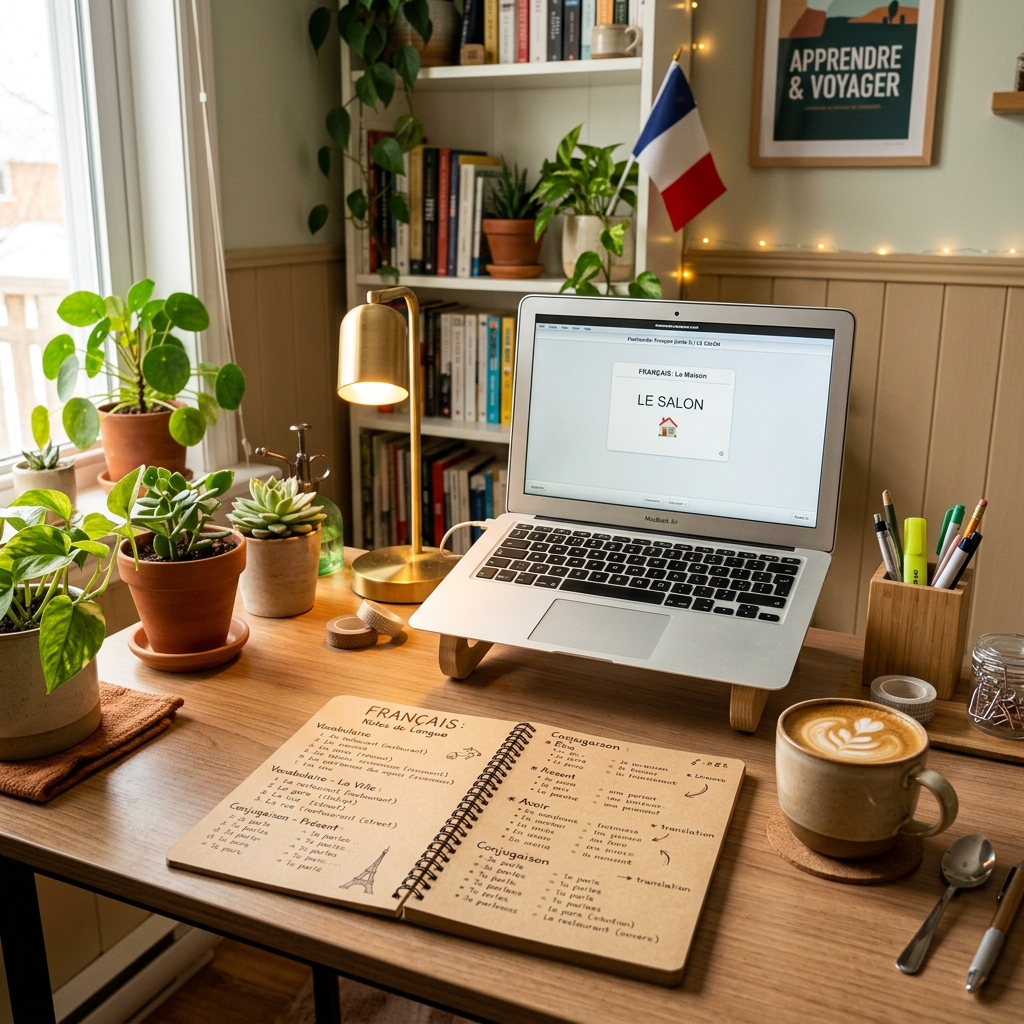
There is a persistent myth that language learning is only for the young --- that past a certain age, your brain loses the ability to pick up new languages. This is wrong. Research does not support it, and thousands of adult learners prove it wrong every year.
What changes after 40 is not your ability to learn, but the strategies that work best. This guide covers what the research actually says about age and language learning, which languages are best suited for adult learners, and practical approaches that work for people with full-time jobs, families, and limited free time.
What the Research Actually Says About Age
The Myth: “You Can Only Learn Languages as a Child”
This misconception comes from the Critical Period Hypothesis, proposed by linguist Eric Lenneberg in 1967. He suggested that language acquisition ability declines sharply after puberty. While this hypothesis has merit for achieving native-like accent and intuitive grammar, it has been widely misapplied to suggest that adults cannot learn languages at all.
What Studies Show
MIT, 2018 (nearly 700,000 participants): This massive study found that grammar learning ability declines gradually after age 17-18 but does NOT drop to zero. Adults in their 40s, 50s, and 60s continued to learn effectively --- just somewhat more slowly for grammatical intuition compared to teenagers.
University of Haifa, 2011: Adults actually outperformed children in initial language learning speed when both groups received the same instruction. Adults’ analytical abilities gave them an advantage in understanding grammar rules and building vocabulary quickly.
Lund University, 2012: Brain imaging showed that intensive language learning physically changes brain structure at any age, increasing gray matter density and strengthening neural connections. These changes were measurable even in adult participants.
Edinburgh University, 2014: A study of 835 individuals showed that bilingualism was associated with delayed onset of dementia symptoms by an average of 4.5 years. Active language learning, even begun later in life, showed cognitive benefits.
The Honest Summary
Adults over 40 can absolutely learn new languages. You will probably not achieve a native accent as easily as a child in an immersion environment. You may need more repetition for memorization. But you have significant advantages: analytical thinking, study discipline, life experience that provides context, and clear motivation.
Best Languages for Learners Over 40
The best language for an adult learner combines linguistic ease with strong motivation and practical utility. Here are the top recommendations:
1. Spanish --- Best Overall for Adult Learners
Spanish is the most frequently recommended language for adult beginners for good reason:
- Phonetic pronunciation reduces frustration
- Massive resource library means you can find materials that match your interests
- Practical utility for travel, volunteering, and community involvement
- Patient native speakers who appreciate any effort
- Strong local communities for practice across the United States
2. Italian --- Best for Cultural Enrichment
For adults motivated by culture, food, travel, or retirement plans:
- Extremely phonetic --- easy to pronounce correctly
- Cultural connections (opera, art, cuisine) provide natural motivation
- Italy is a popular retirement and travel destination for adults 40+
- Satisfying to speak even at a basic level
3. French --- Best for Intellectual Stimulation
For adults who enjoy reading, cinema, and intellectual pursuits:
- 40% vocabulary overlap with English makes reading rewarding quickly
- Rich literary, philosophical, and cinematic tradition
- International utility for travel and volunteering
- Pronunciation provides a genuine cognitive workout
4. Norwegian or Dutch --- Best for Fast Results
For adults who want to see progress quickly:
- Norwegian’s simple grammar and Dutch’s vocabulary overlap deliver quick wins
- Fewer verb forms to memorize means less frustration
- Visible progress within weeks sustains motivation
Strategies That Work for Adults Over 40
1. Structured Learning Over Random Apps
Adults benefit more from understanding grammar rules explicitly. A structured textbook or course that explains why things work --- not just vocabulary drills --- matches how adult brains prefer to process information. Babbel’s structured approach works well for this, as do traditional textbooks.
2. Spaced Repetition for Vocabulary
Memory consolidation may take slightly longer after 40. Spaced repetition systems (SRS) like Anki are specifically designed to optimize review timing for long-term retention. Review vocabulary at expanding intervals rather than cramming.
3. Multimodal Learning
Use multiple input channels: reading, listening, speaking, and writing. This creates more neural pathways to the same information. For practical recommendations, see our best language learning tools guide.
A solid daily routine might include:
- 15 minutes: structured lesson (app or textbook)
- 10 minutes: vocabulary review (Anki/flashcards)
- 15 minutes: listening (podcast or audiobook)
- 10 minutes: reading (news article or graded reader)
4. Conversation Practice From Week One
Adults often resist speaking until they feel “ready.” This delays one of the most effective learning activities. Language exchange apps (Tandem, HelloTalk) and online tutors (italki) let you practice speaking in low-pressure environments from the beginning.
5. Connect to Existing Knowledge
Adults have a massive advantage: decades of world knowledge. You know about politics, history, food, travel, science, and culture. Use this knowledge as scaffolding. Read about topics you already know in your target language. Your existing knowledge fills in vocabulary gaps through context.
6. Protect Your Study Time
Adults have more demands on their time than younger learners. Treat language study as a non-negotiable appointment. Thirty minutes daily, protected from interruptions, produces more progress than sporadic longer sessions.
7. Accept Imperfection
Perfectionism is the biggest enemy of adult language learners. You will make mistakes. Your accent will not be perfect. Your grammar will have gaps. None of this prevents communication. Children learn languages through fearless experimentation --- adults can too.
Common Concerns Addressed
”My Memory Is Not What It Used to Be”
Memory does change with age, but the changes are more nuanced than “everything gets worse.” Procedural memory (learning skills through practice) remains strong. Semantic memory (knowledge and facts) continues to grow. What declines modestly is speed of encoding new information --- which is why spaced repetition and consistent daily practice are important.
”I Do Not Have Time”
You need less time than you think. Fifteen to thirty minutes daily is enough to make real progress in a Category I language. Listen during commutes. Practice flashcards during lunch. Read before bed. Language learning fits into life gaps better than most hobbies.
”I Tried Before and Failed”
Past attempts may have failed due to method, not ability. If you tried only an app, you missed grammar instruction and speaking practice. If you took a class that moved too fast, self-pacing might work better. The method matters more than the learner’s age.
”People Will Judge My Accent”
In reality, most native speakers are encouraging and grateful when someone learns their language. An imperfect accent rarely prevents understanding in easy languages like Spanish or Italian. And research shows that accent continues to improve with exposure at any age.
Realistic Timeline for Adults Over 40
For 30-45 minutes of daily practice in a Category I language:
| Timeline | Milestone |
|---|---|
| Month 1-3 | Basic introductions, ordering food, survival phrases |
| Month 4-6 | Simple conversations about daily life, past tense |
| Month 7-12 | Comfortable social conversations, following media with subtitles |
| Year 1-2 | Handling most daily situations, reading news, expressing opinions |
| Year 2-3 | Near-fluent for motivated learners with consistent practice |
These timelines are realistic for adults who maintain daily practice. Progress may be slightly slower than a 20-year-old’s but is absolutely achievable.
The Bottom Line
The best time to learn a language was 20 years ago. The second-best time is now. Adults over 40 bring analytical skills, life experience, discipline, and motivation that younger learners often lack. The research is clear: your brain remains capable of learning new languages for your entire life. The mechanisms are covered in the bilingual brain and the wider benefits of learning a second language.
Pick a language that excites you from our easiest languages ranking, invest 30 minutes daily, and give yourself permission to be imperfect. A year from now, you will be glad you started.
Frequently Asked Questions
Is it too late to learn a language after 40? ▼
No. Research consistently shows that adults can learn languages effectively at any age. A 2018 MIT study of nearly 700,000 language learners found that while the ability to achieve native-like grammar declines after about age 17, the ability to learn and improve continues well into adulthood. Adults over 40 may not achieve a native accent as easily, but they can reach conversational fluency and professional proficiency in any language.
Do adults learn languages slower than children? ▼
In some ways no. Adults actually learn grammar, vocabulary, and reading faster than children in the early stages because they can use analytical thinking and study strategies. Children have advantages in acquiring native-like pronunciation and intuitive grammar over long periods of immersion. For formal language study, adults are often more efficient learners per hour of study.
What is the best language learning method for older adults? ▼
Research suggests that adults over 40 benefit most from structured, grammar-explicit instruction combined with meaningful communication practice. This means a good textbook or structured course (not just an app), regular conversation practice, and content that interests you. Spaced repetition for vocabulary and regular review are especially important for retention.
Does language learning prevent cognitive decline? ▼
Multiple studies suggest that bilingualism and active language learning may delay the onset of dementia symptoms by 4-5 years and improve general cognitive function. However, these studies show correlation, not definitive causation. Regardless, language learning exercises memory, attention, and executive function --- all of which benefit cognitive health.
How many hours per day should I study as an older learner? ▼
Consistency matters more than duration. Research suggests 30-45 minutes of focused daily study is more effective than infrequent long sessions for adult learners. If you can manage 45-60 minutes daily across different activities (study, listening, reading), you will make steady progress. Fatigue reduces retention, so shorter, focused sessions are preferable.
We research and compile information about language learning from linguistic studies, FSI data, and language learning communities.
Related reading
 Comparisons
Easiest Language to Learn for Business and Career Growth
Which easy-to-learn languages offer the best career ROI? We rank languages by business utility, job demand, and learning difficulty.
 Language Rankings
What Is the Easiest Language to Learn for English Speakers?
Discover the 10 easiest languages for English speakers ranked by FSI data, grammar complexity, and learner experience. Updated for 2026.
Learning TipsEasiest Language to Learn for Kids: A Parent's Guide
Which languages are best for children to learn? Age-appropriate recommendations, resources, and realistic expectations for parents.